
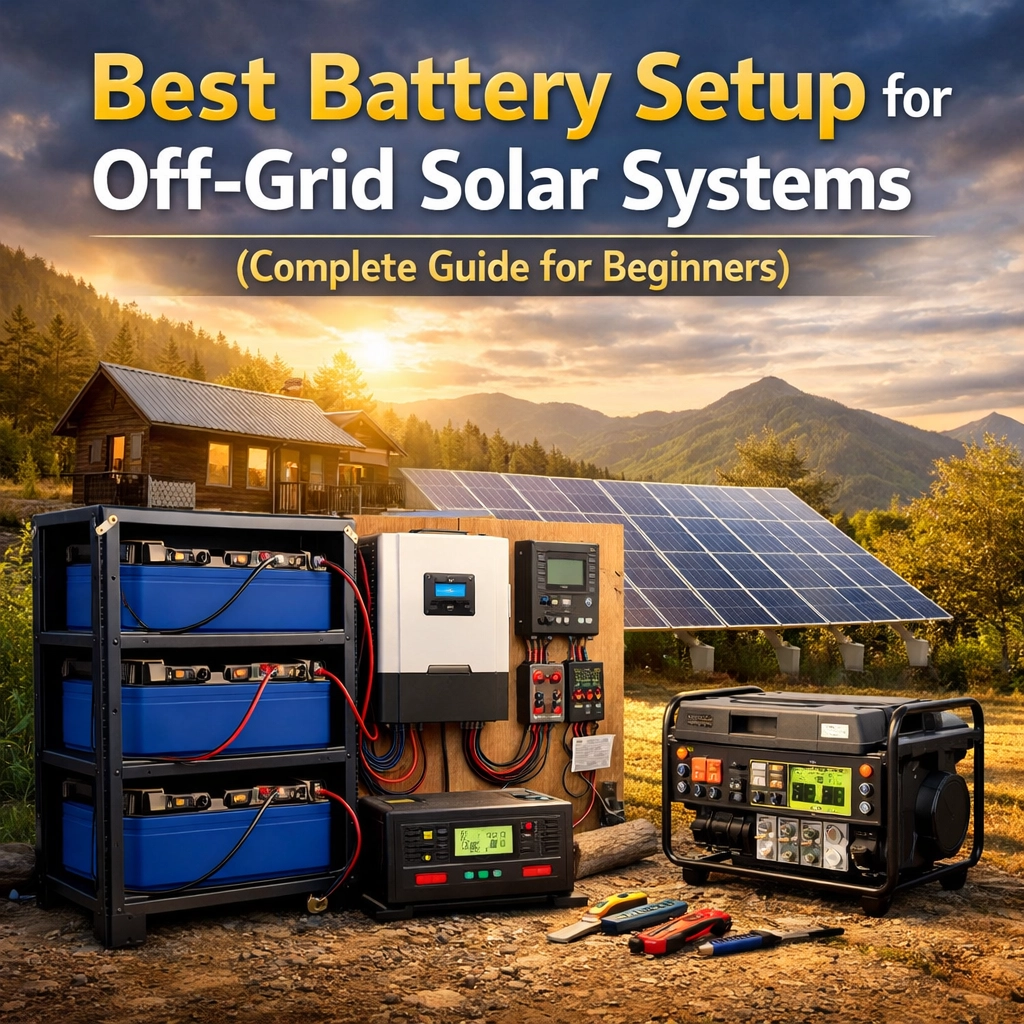
Off-grid solar systems are becoming increasingly popular for homes, cabins, farms, and remote areas where access to the electrical grid is limited or unreliable. A key component of any off-grid solar system is the battery setup, which stores energy generated by solar panels so it can be used at night or during cloudy weather.
Choosing the best battery setup for an off-grid solar system is important because it determines how much power you can store, how reliable your system will be, and how long your equipment will last.
In this guide, we will explain the best battery configurations for off-grid solar systems, the types of batteries available, and how to design a battery bank that meets your energy needs.
What Is an Off-Grid Solar Battery Setup?
An off-grid solar battery setup is an energy storage system designed to store electricity produced by solar panels. Unlike grid-tied solar systems, off-grid systems operate independently from the utility power grid.
This means that all electricity used in the home must come from:
- solar panels
- battery storage
- backup generators (optional)
A typical off-grid solar power system follows this flow:
Solar Panels → Charge Controller → Battery Bank → Inverter → Appliances
The battery bank acts as the main energy storage unit, ensuring that power is available even when solar panels are not generating electricity.
For people who want a simpler way to start using solar energy, ready-made solar power systems can provide a convenient solution without the need to assemble each component individually.
👉 Browse our Ready-Made Solar Power Systems
These solar power units are designed for reliable backup electricity and are ideal for households looking for a practical off-grid or emergency solar solution.
Why Best Battery Setup Matters in Off-Grid Solar Systems
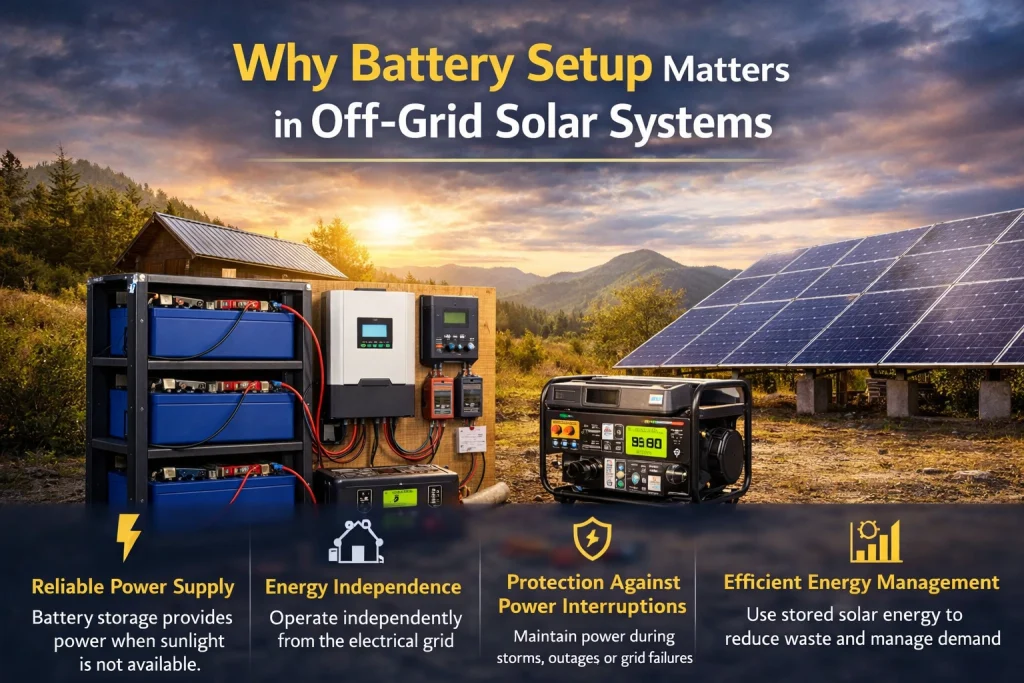
The battery system is one of the most important components of an off-grid solar installation. Unlike grid-connected solar systems, off-grid setups rely entirely on solar panels and battery storage to supply electricity for daily use.
During the day, solar panels generate electricity when exposed to sunlight. However, energy consumption often continues even when solar panels are not producing power, such as during nighttime or cloudy weather. This is where the battery bank becomes essential.
A properly designed battery system stores excess solar energy produced during the day and makes it available whenever electricity is needed. Without an efficient battery setup, solar energy would be wasted, and power would not be available when the sun is not shining.
For this reason, selecting the right battery capacity, battery type, and system configuration is crucial for maintaining a reliable off-grid power system.
A well-designed battery system provides several important benefits.
Reliable Power Supply
One of the main advantages of having a solar battery bank is the ability to maintain a steady power supply throughout the day and night.
Solar panels only generate electricity when exposed to sunlight. Without batteries, the energy produced during the day cannot be stored for later use. A battery bank allows your home to continue receiving electricity even when the sun sets.
This stored energy can power essential appliances such as:
- lights
- fans
- refrigerators
- communication devices
- small home electronics
A reliable battery system ensures that electricity remains available whenever it is needed.
Energy Independence
Another major benefit of an off-grid battery setup is the ability to achieve complete energy independence.
With a properly sized solar array and battery bank, homeowners can operate their homes without relying on the public power grid. This is especially useful in remote locations where utility power is unavailable or unreliable.
Energy independence also protects homeowners from rising electricity costs and power interruptions caused by grid failures.
Many off-grid homes rely entirely on solar battery systems for daily energy needs, allowing them to live sustainably and independently.
Protection Against Power Interruptions
Battery systems also provide protection during unexpected power interruptions.
Even in areas connected to the electrical grid, power outages may occur due to severe weather conditions, infrastructure problems, or natural disasters. With a solar battery system in place, stored energy can continue powering critical appliances during these outages.
This makes solar battery banks useful not only for off-grid homes but also for backup power systems.
Reliable battery storage helps maintain power for important devices such as lighting, communication equipment, and refrigeration during emergency situations.
Efficient Energy Management
A well-designed battery system helps homeowners manage their energy usage more efficiently.
During peak sunlight hours, solar panels may produce more electricity than the home immediately consumes. Instead of wasting this excess energy, the battery bank stores it for later use.
This stored energy can then be used:
- during nighttime
- during cloudy weather
- during periods of higher electricity demand
Efficient energy storage allows homeowners to maximize the benefits of their solar panels and reduce energy waste.
Improved Solar System Performance
An optimized battery setup also improves the overall performance of the solar power system. Proper battery storage allows solar panels to operate more efficiently by capturing and storing excess energy that would otherwise be lost.
When the battery bank is correctly sized and properly configured, the solar system can maintain stable voltage and provide consistent power output. This improves the reliability of the entire solar installation and ensures appliances receive stable electricity.
Long-Term Cost Savings
Although batteries are one of the more expensive components of a solar system, they can provide significant long-term savings for homeowners. A properly designed solar battery setup allows households to store excess solar energy during the day and use it later when electricity is needed.
By storing solar energy for later use, battery systems reduce the need to rely on alternative power sources such as fuel generators or utility electricity. This can help lower monthly electricity expenses and eliminate the recurring cost of purchasing fuel for generators.
In countries like the Philippines, where electricity prices can fluctuate and power interruptions can occur, having a solar battery system can provide both financial and practical benefits. Over time, the savings from reduced electricity consumption and lower fuel costs can help offset the initial investment in solar battery storage.
Additionally, modern battery technologies such as LiFePO4 batteries are designed for long-term use and can last for many years with proper care. This makes solar battery systems a durable and reliable energy solution.
For homeowners looking for a sustainable and cost-effective way to power their homes during outages, investing in a well-designed solar battery bank is often a smart long-term decision. If you prefer a ready-to-use solar solution, you can also explore available solar power systems designed for home backup and off-grid use.
These solar units provide reliable backup electricity while helping households take advantage of clean and renewable solar energy.
Types of Batteries for Off-Grid Solar Systems
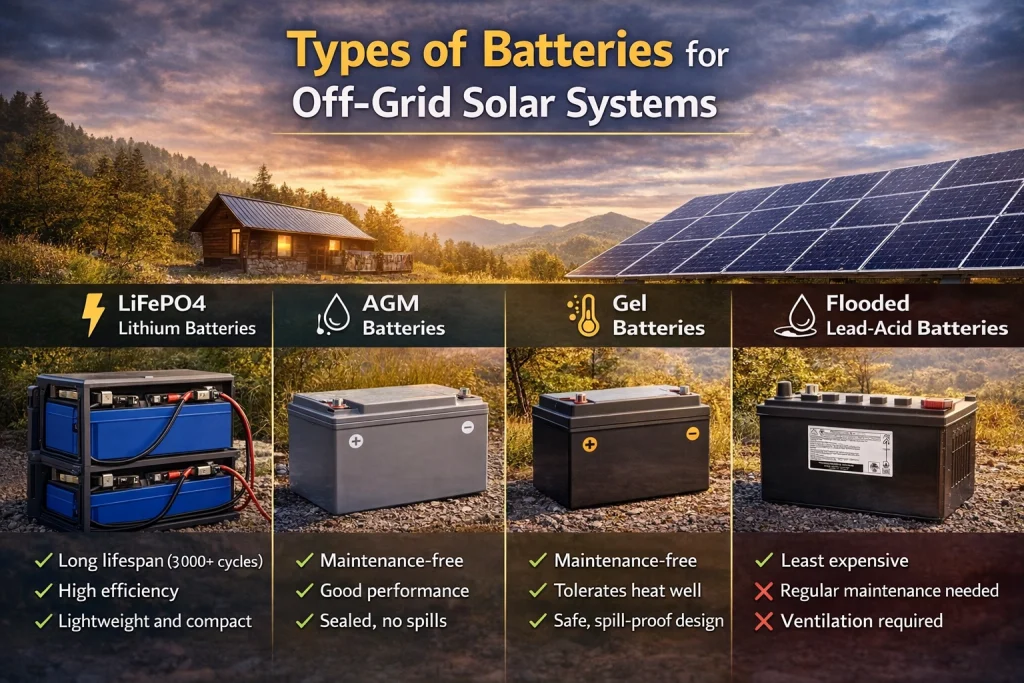
There are several types of batteries commonly used in solar power systems.
Lead-Acid Batteries
Lead-acid batteries are one of the oldest battery technologies used in solar systems.
Advantages:
- lower upfront cost
- widely available
Disadvantages:
- shorter lifespan
- heavy and bulky
- require maintenance
These batteries are often used in small or budget solar setups.
AGM Batteries
AGM (Absorbent Glass Mat) batteries are a type of sealed lead-acid battery.
Advantages:
- maintenance-free
- more durable than flooded batteries
- safer design
However, AGM batteries still have shorter lifespans compared to lithium batteries.
LiFePO4 Lithium Batteries
Lithium Iron Phosphate batteries are now considered one of the best options for off-grid solar systems.
Advantages:
- long lifespan (3,000 to 6,000 cycles)
- lightweight and compact
- high efficiency
- minimal maintenance
Because of these benefits, many modern off-grid systems use LiFePO4 battery banks.
Best Battery Voltage for Off-Grid Systems
Battery banks can be designed using different system voltages.
12V Systems
12V battery systems are suitable for:
- small cabins
- RV systems
- small off-grid setups
They are simple to install but limited in power capacity.
24V Systems
24V systems are used for medium-sized solar setups.
Advantages:
- better efficiency than 12V
- supports larger loads
- lower current flow
48V Systems
48V battery systems are commonly used for large off-grid homes.
Advantages:
- higher efficiency
- supports larger inverters
- lower energy loss
Many professional off-grid solar systems operate at 48V battery voltage.
How to Size an Off-Grid Solar Battery Bank
Proper battery sizing ensures your solar system can provide electricity throughout the night or during periods of low sunlight.
To determine the correct battery size, calculate your daily electricity consumption.
Example:
| Appliance | Power | Hours | Daily Use |
|---|---|---|---|
| Lights | 50W | 5 hours | 250Wh |
| Fan | 75W | 6 hours | 450Wh |
| TV | 100W | 4 hours | 400Wh |
Total daily energy consumption:
1100Wh per day
A solar battery bank should typically store 1.5 to 2 times the daily energy usage to provide reliable backup.
Example Off-Grid Battery Setup
Here is an example of a simple off-grid solar battery system.
| Component | Example |
|---|---|
| Solar Panels | 800W |
| Charge Controller | 60A MPPT |
| Battery Bank | 24V 200Ah LiFePO4 |
| Inverter | 2000W |
This system can power basic household appliances and small electronics.
Tips for Building an Efficient Off-Grid Battery Bank
Building an efficient off-grid battery bank requires proper planning, high-quality components, and safe installation practices. A well-designed battery system ensures reliable power storage, longer equipment lifespan, and improved overall performance of your solar power setup.
Below are several important tips to help you build a reliable and efficient off-grid solar battery bank.
Use High-Quality Batteries
Choosing high-quality batteries is one of the most important decisions when building an off-grid solar system. Batteries act as the main energy storage component, so their reliability directly affects the performance of your entire solar setup.
Investing in durable batteries helps ensure:
- longer lifespan
- stable energy storage
- fewer replacements over time
Many solar system owners now prefer LiFePO4 lithium batteries because they offer longer cycle life, higher efficiency, and minimal maintenance compared to traditional lead-acid batteries.
Although lithium batteries may cost more initially, they often provide better long-term value because of their durability and performance.
Match the Battery with the Inverter
Your inverter and battery bank must be compatible in order for the system to function safely and efficiently.
The inverter converts the stored DC electricity from the battery into AC power that household appliances can use. Because of this, the inverter voltage must match the battery bank voltage.
Examples include:
- 12V battery bank → 12V inverter
- 24V battery bank → 24V inverter
- 48V battery bank → 48V inverter
Using mismatched voltage equipment may cause system failure, reduced performance, or damage to electrical components.
Install Battery Protection Devices
Safety should always be a top priority when designing a solar battery system. Proper protection devices help prevent electrical faults and protect the battery bank from damage.
Important safety components include:
- DC circuit breakers
- battery fuses
- disconnect switches
- overcurrent protection
These devices protect the system from problems such as short circuits, overloads, and unexpected electrical faults.
Installing protection devices also makes maintenance and troubleshooting easier.
Monitor Battery Performance
Monitoring your battery bank helps ensure the system operates within safe and efficient limits. Battery monitoring systems provide valuable information about how your solar system is performing.
A battery monitor can track important data such as:
- battery voltage
- charging current
- battery capacity
- energy usage
This information helps users understand energy consumption and detect potential issues before they become serious problems.
Some modern LiFePO4 batteries even include Bluetooth monitoring, allowing users to check battery status through a mobile app.
Use Proper Cable Size and Wiring
Correct wiring is essential for efficient power transfer in off-grid solar systems. Using cables that are too small may cause voltage drop, overheating, and energy loss.
To maintain system efficiency:
- use the appropriate cable gauge for the current load
- keep cable runs as short as possible
- use high-quality solar connectors
Proper wiring improves system reliability and reduces power loss.
Plan for Future Expansion
One advantage of solar battery systems is that they can be expanded over time. When designing your battery bank, consider leaving room for future upgrades.
You may eventually want to:
- add more batteries for additional storage capacity
- install more solar panels
- upgrade your inverter for larger loads
Planning ahead makes it easier to expand your system without replacing major components.
Maintain Proper Ventilation
Even though modern lithium batteries generate minimal heat, proper airflow is still recommended for battery installations.
Battery systems should be installed in a location that is:
- cool and dry
- protected from direct sunlight
- well ventilated
Good ventilation helps maintain stable operating temperatures and improves the lifespan of the battery bank.
Common Mistakes When Setting Up Off-Grid Batteries
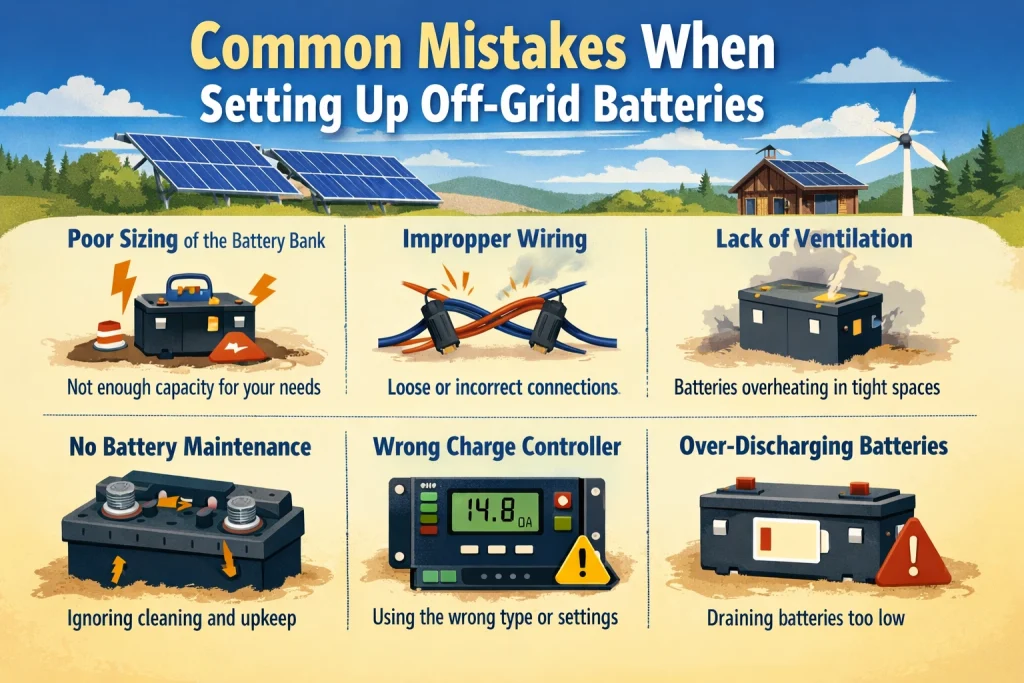
Designing an off-grid solar battery system requires careful planning and proper component selection. Many beginners make common mistakes that can reduce system efficiency, damage equipment, or lead to unstable power supply.
Understanding these mistakes can help you avoid costly problems and ensure your solar system performs reliably for many years.
Undersized Battery Bank
One of the most common mistakes in off-grid solar systems is installing a battery bank that is too small for the household’s energy needs.
If the battery capacity is insufficient, the system may run out of stored energy before the next solar charging cycle. This can lead to frequent power shortages, especially during nighttime or cloudy weather.
To avoid this problem:
- calculate your daily energy consumption
- choose a battery capacity that can store at least 1.5 to 2 times your daily usage
- allow extra storage for emergency backup
A properly sized battery bank ensures your system can deliver stable power even during periods of low sunlight.
Mixing Different Batteries
Another serious mistake is mixing batteries with different capacities, ages, or chemistries in the same battery bank.
For example, combining:
- lithium batteries with lead-acid batteries
- batteries with different amp-hour ratings
- old batteries with new ones
can cause uneven charging and discharging. This imbalance may shorten battery life and reduce the efficiency of the entire battery bank.
For best results:
- use batteries of the same brand, type, and capacity
- install batteries with similar manufacturing dates
- follow recommended battery bank configurations
Maintaining battery uniformity helps ensure balanced performance and longer battery lifespan.
Poor Wiring Design
Improper wiring is another common issue in DIY solar installations. Using cables that are too small for the system load can cause voltage drops, overheating, and energy loss.
Poor wiring may also result in unstable power delivery to appliances.
To ensure proper wiring design:
- use correct cable sizes based on current load
- keep cable runs as short as possible
- use high-quality connectors and terminals
- follow recommended wiring practices for solar systems
Correct wiring improves efficiency and ensures safe operation of the battery bank.
Lack of System Protection
Many beginner solar systems fail to include essential safety components. Without proper protection devices, electrical faults may cause serious damage to batteries and other equipment.
Important protection components include:
- DC circuit breakers
- battery fuses
- disconnect switches
- surge protection
These devices help protect the system from overloads, short circuits, and unexpected electrical problems.
Installing proper safety protection also makes maintenance and troubleshooting easier.
Overloading the Battery System
Another mistake is connecting appliances that exceed the battery bank’s power capacity.
When too many high-power devices are connected, the battery system may discharge too quickly or overload the inverter. Before connecting appliances, calculate the total power consumption of your devices and ensure the battery bank and inverter can safely support the load.
Proper load management helps maintain system stability and protects battery health.
Poor Battery Placement
Battery placement is often overlooked during system installation. Installing batteries in areas exposed to extreme heat, moisture, or poor ventilation can negatively affect performance and lifespan.
To maintain battery health:
- install batteries in a cool, dry location
- avoid direct sunlight exposure
- ensure adequate airflow around the battery bank
Proper placement improves battery efficiency and helps prevent overheating.
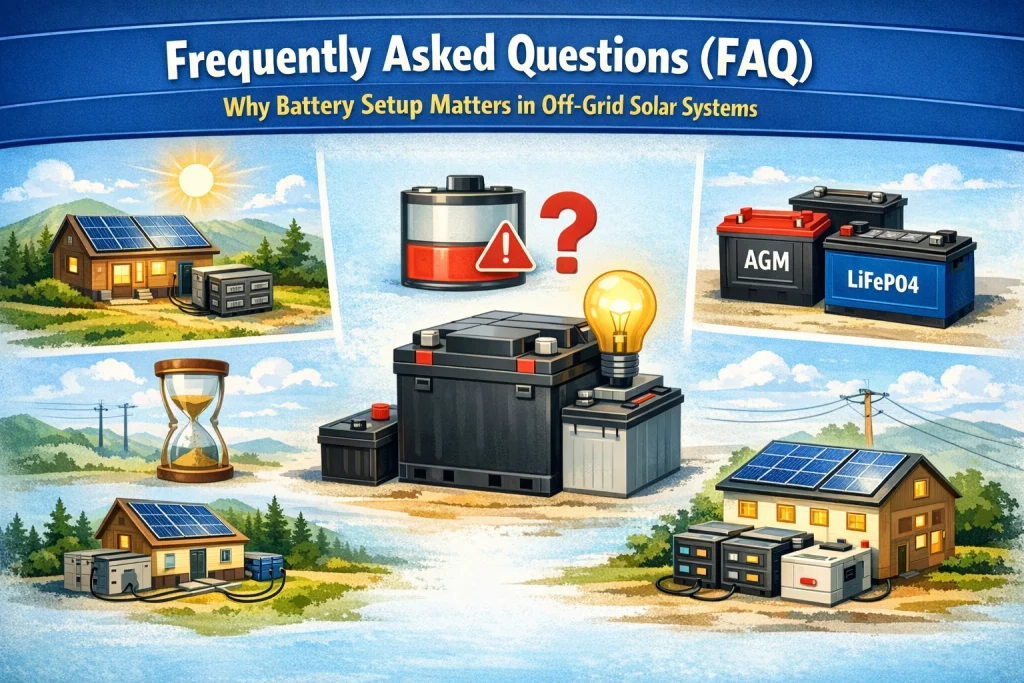
Frequently Asked Questions (FAQ) – Why Battery Setup Matters in Off-Grid Solar Systems
Why is battery storage important in an off-grid solar system?
Battery storage is essential in an off-grid solar system because it stores the electricity generated by solar panels during the day. This stored energy can then be used at night or during cloudy weather when solar panels are not producing power.
Without a battery bank, the energy produced by solar panels would only be usable while the sun is shining, making it difficult to maintain a reliable electricity supply for your home.
What happens if an off-grid solar system does not have enough battery capacity?
If the battery bank is too small, the system may run out of stored energy before the next solar charging cycle. This can cause power interruptions, especially during nighttime or extended cloudy periods.
A properly sized battery bank ensures that enough energy is stored to power essential appliances until the solar panels can recharge the batteries again.
What type of battery is best for off-grid solar systems?
Several battery types can be used in off-grid solar systems, including lead-acid, AGM, gel, and lithium batteries. Among these options, LiFePO4 lithium batteries are widely considered one of the best choices due to their long lifespan, high efficiency, and minimal maintenance requirements.
These batteries can last significantly longer than traditional lead-acid batteries and are more efficient in storing and delivering solar energy.
How long do off-grid solar batteries typically last?
The lifespan of solar batteries depends on the type of battery used and how well the system is maintained.
Typical battery lifespans include:
- Lead-acid batteries: about 3 to 5 years
- AGM batteries: around 4 to 7 years
- LiFePO4 lithium batteries: approximately 8 to 15 years
Proper charging, temperature control, and system design can significantly extend battery life.
Can an off-grid solar battery system power an entire house?
Yes, an off-grid solar battery system can power an entire house if the system is properly designed with sufficient solar panels and battery storage capacity.
However, the size of the battery bank must match the household’s energy consumption. Larger homes with higher electricity usage may require larger battery systems, often operating at 24V or 48V configurations.
How do I know the correct battery size for my off-grid system?
To determine the correct battery size, you need to calculate your daily energy consumption in watt-hours (Wh). Once you know how much electricity your home uses per day, you can choose a battery bank capable of storing enough energy to meet your needs.
Many solar system designers recommend having enough battery capacity to store at least one to two days of energy usage to ensure reliable power during periods of low sunlight.
Looking for Reliable Solar Power Systems?
If you prefer a ready-to-use solar solution instead of building everything from scratch, you can explore our solar power units designed for off-grid homes and backup electricity.
Final Thoughts
Choosing the best battery setup for an off-grid solar system is crucial for achieving reliable and efficient energy storage. A well-designed battery bank ensures that solar energy can be stored during the day and used whenever electricity is needed.
For most modern off-grid solar installations, LiFePO4 battery systems provide the best combination of durability, efficiency, and safety. With proper planning and system design, an off-grid solar battery setup can provide dependable power for many years.