
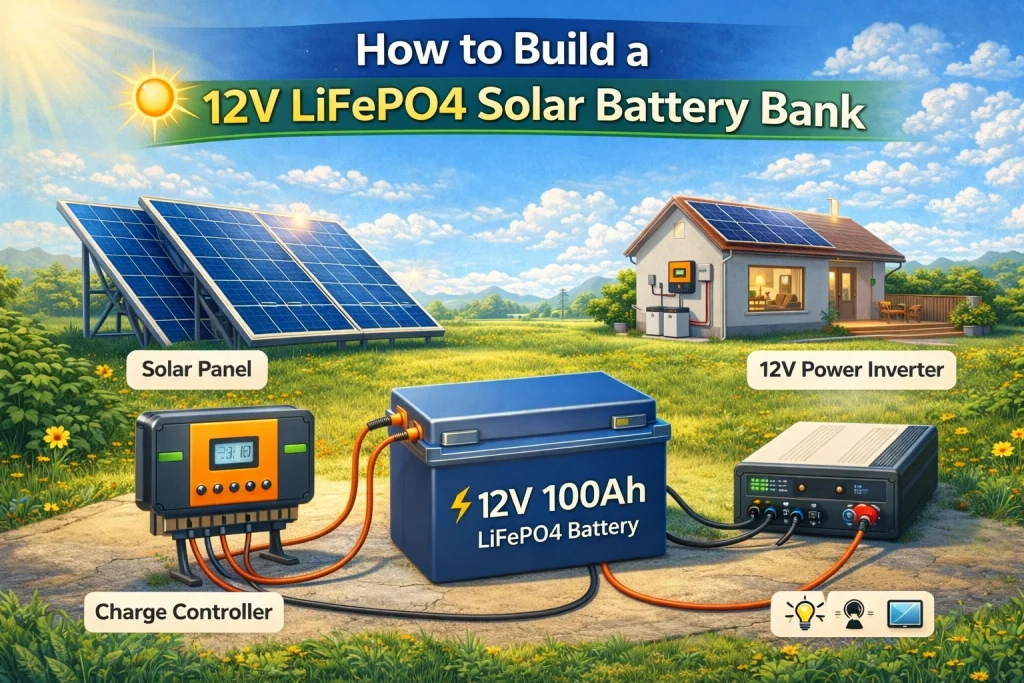
Building a 12V LiFePO4 solar battery bank is one of the best ways to store solar energy for off-grid systems, emergency backup power, and portable solar setups. Lithium Iron Phosphate (LiFePO4) batteries have become very popular in modern solar installations because they offer long lifespan, high efficiency, and improved safety compared to traditional lead-acid batteries.
In this guide, you will learn how to build a 12V LiFePO4 solar battery bank step-by-step, the components you need, and the best practices for a safe and efficient solar energy system.
What Is a 12V LiFePO4 Solar Battery Bank?
A 12V LiFePO4 battery bank is a group of lithium batteries connected to store energy generated from solar panels. This stored energy can then be used to power appliances when the sun is not available, such as at night or during cloudy weather.
A typical solar battery system follows this energy flow:
Solar Panel → Charge Controller → Battery Bank → Inverter → Appliances
The battery bank acts as the energy storage system, allowing you to use solar electricity whenever you need it.
Why Choose LiFePO4 Batteries for Solar Systems?
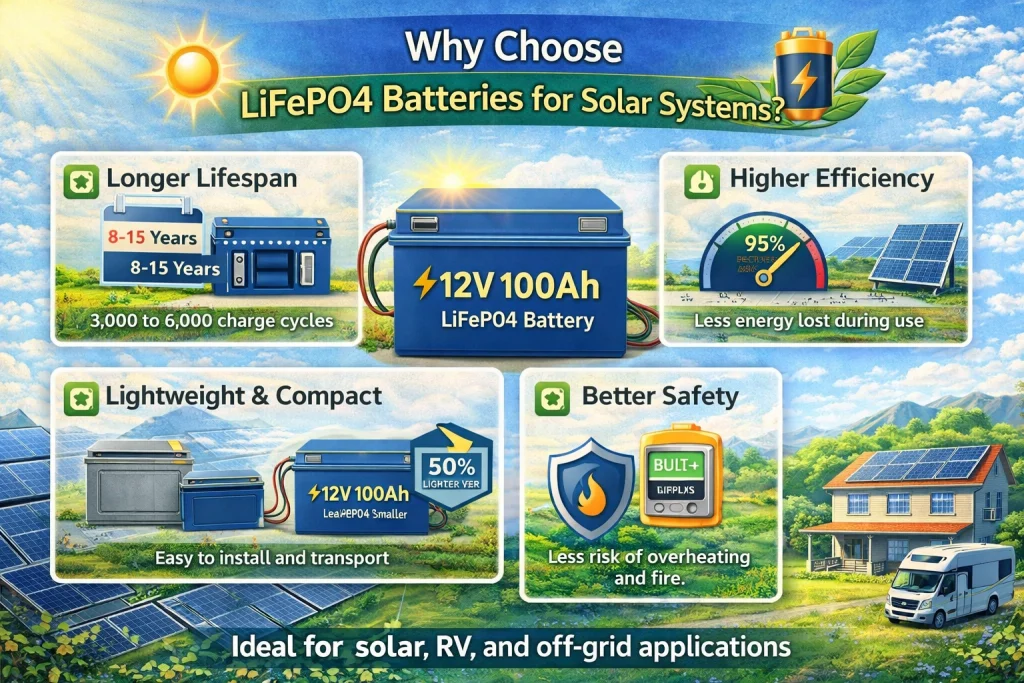
LiFePO4 batteries are widely used in solar power systems because they provide several advantages over traditional battery technologies.
Longer Lifespan
One of the biggest advantages of LiFePO4 batteries is their long lifespan compared to traditional battery types. While lead-acid batteries typically last only a few hundred to around one thousand charge cycles, LiFePO4 batteries can last between 3,000 to 6,000 charge cycles depending on usage and charging conditions.
This means a properly maintained LiFePO4 battery can last 8 to 15 years or more, making it a reliable long-term energy storage solution for solar systems. Because of this extended lifespan, many solar users consider LiFePO4 batteries a better long-term investment despite their higher initial cost.
Higher Efficiency
Lithium batteries are known for their high energy efficiency. LiFePO4 batteries usually have an efficiency rate of around 90% to 98%, meaning most of the stored energy can be used without significant losses during charging and discharging.
In contrast, traditional lead-acid batteries lose more energy due to heat and internal resistance. Higher efficiency allows LiFePO4 systems to deliver more usable power while reducing wasted energy, which is especially important in solar energy systems where maximizing stored energy is essential.
Lightweight and Compact
Another major benefit of LiFePO4 batteries is their lightweight and compact design. Compared to lead-acid batteries with similar capacity, LiFePO4 batteries can be significantly lighter and smaller, making them easier to transport, install, and integrate into solar setups.
This is particularly beneficial for applications where space and weight are important factors, such as:
- portable solar power stations
- RV solar systems
- mobile homes and camper vans
- small off-grid solar installations
Because of their compact design, LiFePO4 batteries can be installed in tighter spaces while still providing high energy capacity.
Better Safety
Safety is another reason why LiFePO4 batteries are widely used in modern energy systems. LiFePO4 chemistry is known for its high thermal stability, which makes it less prone to overheating, fire hazards, or thermal runaway compared to other lithium battery types.
Most LiFePO4 batteries also include a built-in Battery Management System (BMS) that helps protect the battery from potential issues such as:
- overcharging
- over-discharging
- short circuits
- temperature extremes
These built-in safety mechanisms make LiFePO4 batteries one of the safest lithium battery technologies available today.
Widely Used in Modern Power Systems in the Philippines
Because of these advantages, LiFePO4 batteries are now widely used across many modern energy applications, including in the Philippines, where reliable backup power is becoming increasingly important. Their reliability, long lifespan, and high efficiency make them ideal for systems that require dependable energy storage, especially in areas that experience frequent brownouts or unstable electricity supply.
In the Philippines, LiFePO4 batteries are commonly used in several energy systems such as:
- solar energy systems for storing renewable power generated from solar panels
- RV and camper power systems for mobile living and travel
- portable power stations used for outdoor activities, camping, and emergency backup
- off-grid homes in rural or remote areas where access to stable electricity may be limited
Because the Philippines receives abundant sunlight throughout the year, solar technology continues to grow in popularity. As a result, LiFePO4 batteries are becoming one of the most trusted energy storage solutions for both residential solar systems and portable backup power units.
Many Filipino households are now using solar battery systems to maintain electricity during brownouts, reduce dependence on traditional power sources, and take advantage of clean and renewable solar energy.
If you’re looking for reliable solar power systems designed for home backup or off-grid use in the Philippines, you can explore our available solar units here:
These solar power systems are designed to provide dependable electricity during brownouts while helping Filipino households benefit from sustainable and renewable solar energy.
Components Needed for a 12V Solar Battery Bank
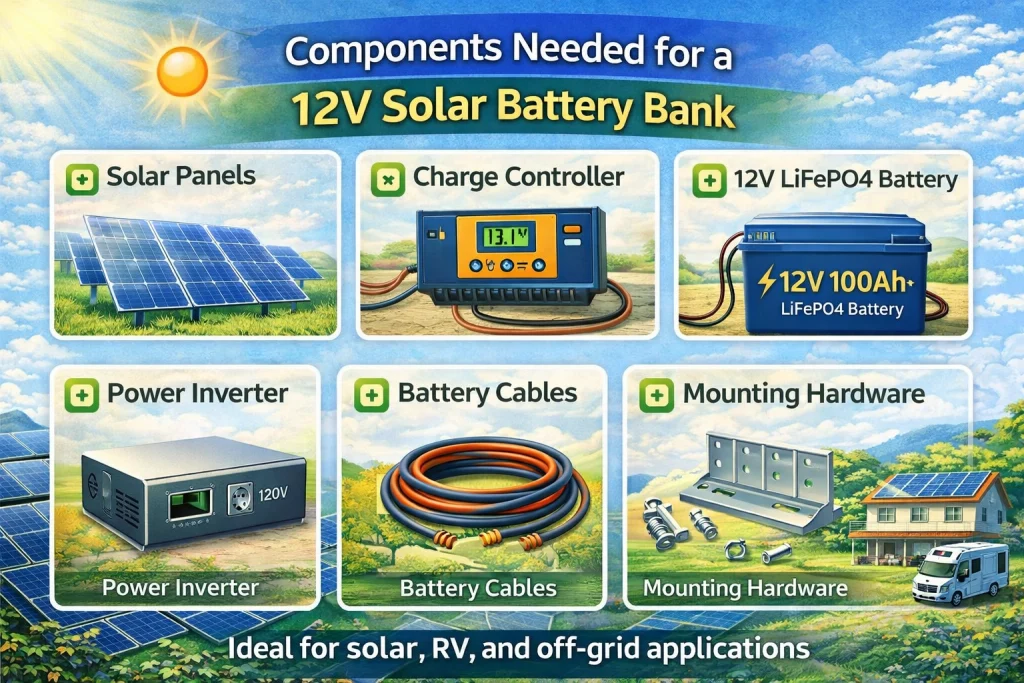
Before building your battery bank, it is important to prepare the necessary components.
1. LiFePO4 Battery
The most important component is the lithium battery itself.
Common sizes include:
- 12V 50Ah
- 12V 100Ah
- 12V 200Ah
For small home solar setups, a 12V 100Ah LiFePO4 battery is often a good starting point.
2. Solar Panels
Solar panels generate electricity from sunlight.
Popular panel sizes include:
- 100W solar panel
- 300W solar panel
- 400W solar panel
The number of panels you need depends on how much electricity your system consumes daily.
3. Solar Charge Controller
The charge controller regulates the power from the solar panels before it reaches the battery.
There are two main types:
PWM controllers
- cheaper
- suitable for small systems
MPPT controllers
- more efficient
- ideal for larger solar systems
MPPT controllers can increase charging efficiency by 20–30%.
4. Inverter
Solar batteries store DC electricity, but most home appliances use AC electricity.
An inverter converts:
DC power → AC power
Example inverter sizes:
- 500W inverter
- 1000W inverter
- 2000W inverter
Choose an inverter based on the total wattage of your appliances.
5. Solar Cables and Connectors
Proper wiring is essential for safe solar installations.
Common solar wiring sizes:
- 10 AWG
- 12 AWG
- 14 AWG
Thicker cables reduce voltage loss and improve efficiency.
6. Protection Devices
Safety devices are extremely important in solar systems.
Recommended protection components include:
- DC circuit breakers
- battery fuse
- disconnect switch
- grounding system
These devices protect the system from electrical faults.
Step-by-Step Guide to Building a 12V Solar Battery Bank
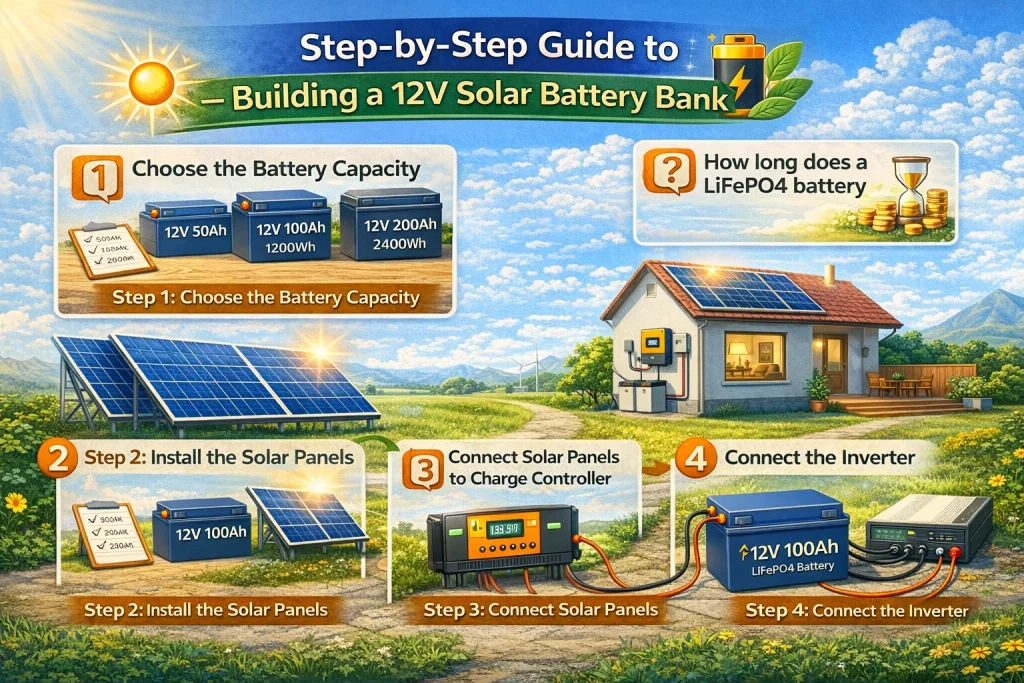
Step 1: Choose the Battery Capacity
Start by selecting the correct battery size based on your energy usage.
Example:
| Battery | Energy Capacity |
|---|---|
| 12V 50Ah | 600Wh |
| 12V 100Ah | 1200Wh |
| 12V 200Ah | 2400Wh |
A 12V 100Ah battery can typically power:
- LED lights
- electric fan
- phone charging
- small TV
Step 2: Install the Solar Panels
Place the solar panels in a location with maximum sunlight exposure.
Best practices include:
- face panels toward the sun
- avoid shade from trees or buildings
- install panels at an optimal tilt angle
This ensures maximum energy production throughout the day.
Step 3: Connect Solar Panels to Charge Controller
Use proper solar cables to connect the solar panels to the charge controller.
Connection order is important:
Solar panel → Charge controller → Battery
Never connect panels directly to the battery without a controller.
Step 4: Connect the Battery Bank
Next, connect your LiFePO4 battery to the charge controller.
Ensure the correct polarity:
- red wire → positive terminal
- black wire → negative terminal
Always install a fuse or breaker between the battery and controller for safety.
Step 5: Connect the Inverter
Finally, connect the inverter to the battery bank.
The inverter will allow you to power household appliances such as:
- lights
- fans
- televisions
- laptops
Make sure the inverter capacity matches your load requirements.
If you prefer a simpler solution without assembling individual components, you can also choose a ready-made solar power system that already includes a battery, inverter, and charging system in one unit.
👉 Explore Ready-Made Solar Power Systems
These systems are designed for easy installation and are ideal for beginners who want reliable backup power during brownouts or power interruptions.
Example 12V Solar System Setup
Here is an example of a beginner-friendly solar setup.
| Component | Example |
|---|---|
| Solar Panel | 300W |
| Charge Controller | 25A MPPT |
| Battery | 12V 100Ah LiFePO4 |
| Inverter | 800W |
This system can power several small appliances and is a good starting point for beginners.
Tips for Maintaining Your LiFePO4 Battery Bank
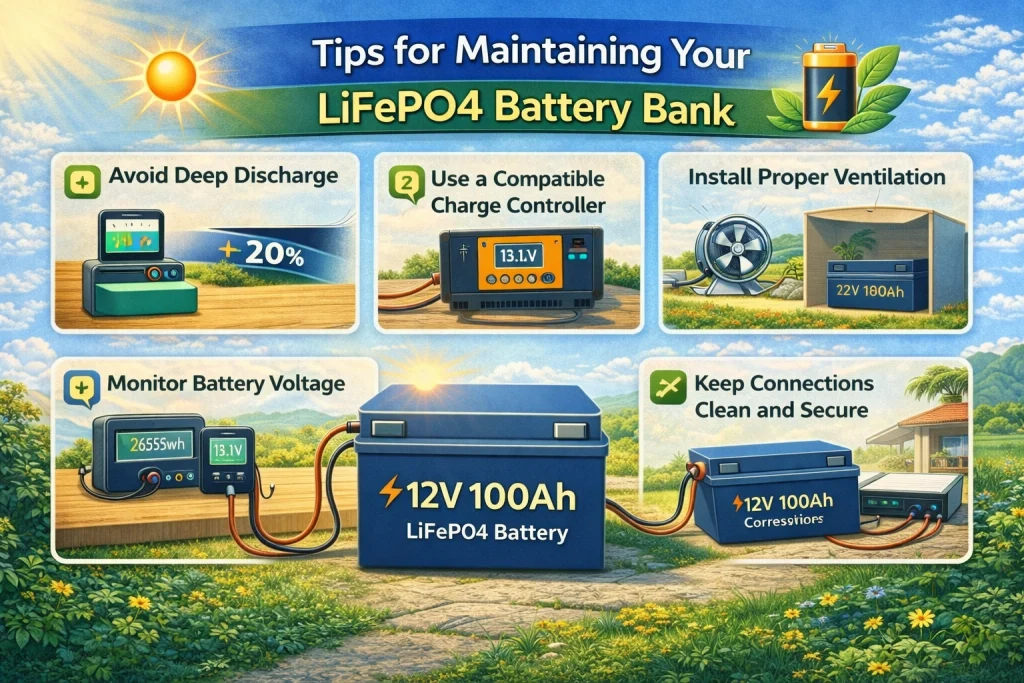
Proper maintenance of your LiFePO4 battery bank is essential to ensure long lifespan, stable performance, and safe operation of your solar power system. Although LiFePO4 batteries require less maintenance compared to traditional lead-acid batteries, following proper practices can significantly extend their lifespan and efficiency.
Below are some important tips to help maintain your LiFePO4 solar battery bank.
Avoid Deep Discharge
One of the most important rules in maintaining lithium batteries is avoiding deep discharge.
While LiFePO4 batteries are designed to handle deeper discharge compared to lead-acid batteries, repeatedly draining the battery to extremely low levels can still reduce its lifespan over time.
For best performance:
- Try not to discharge the battery below 20% capacity
- Maintain the battery within a 20% to 80% charge range when possible
- Use a charge controller or inverter with low-voltage cutoff protection
Keeping the battery within a healthy charge range helps maintain battery health and improves long-term performance.
Use a Compatible Charge Controller
Not all solar charge controllers are optimized for lithium batteries. Using a controller that does not support LiFePO4 charging profiles may result in improper charging, which can reduce battery life.
A compatible charge controller ensures the correct charging stages and voltage settings for lithium batteries.
When selecting a controller, make sure it supports:
- LiFePO4 charging mode
- adjustable charging voltage
- temperature protection
- overcharge protection
MPPT charge controllers are generally recommended because they provide higher efficiency and better battery charging performance.
Install Proper Ventilation
Although LiFePO4 batteries generate significantly less heat than lead-acid batteries, proper ventilation is still important for maintaining safe operating temperatures.
Battery systems installed in enclosed spaces should allow sufficient airflow to prevent heat buildup, especially when the battery is charging or powering appliances.
Good ventilation helps:
- prevent overheating
- maintain battery efficiency
- improve overall system safety
Always install the battery in a cool, dry, and well-ventilated location.
Monitor Battery Voltage
Monitoring your battery voltage helps ensure the system is operating within safe limits.
Using a battery monitor or smart battery management system allows you to track important information such as:
- battery voltage
- charging current
- battery capacity
- power consumption
This information helps detect potential issues early and ensures the battery is operating efficiently.
Many modern LiFePO4 batteries also include built-in Bluetooth monitoring, allowing users to check battery status directly from a smartphone.
Keep Connections Clean and Secure
Loose or corroded battery connections can cause voltage drops, reduced efficiency, or even electrical hazards.
To maintain reliable performance:
- regularly inspect battery terminals
- ensure all cables are tightly secured
- clean terminals if corrosion appears
- use proper connectors and insulated cables
Well-maintained electrical connections improve system stability and prevent unnecessary energy loss.
Protect the Battery from Extreme Temperatures
Extreme temperatures can affect the performance and lifespan of lithium batteries.
LiFePO4 batteries perform best within a moderate temperature range. Very high temperatures can accelerate battery degradation, while extremely low temperatures may affect charging performance.
To protect your battery:
- avoid placing it under direct sunlight
- keep it away from high heat sources
- install it in a shaded or temperature-controlled area
Maintaining stable temperature conditions helps preserve battery health for many years.
Perform Regular System Checks
Even though LiFePO4 systems require minimal maintenance, it is still good practice to perform periodic system checks.
Every few months, inspect your solar system components such as:
- solar panel connections
- charge controller settings
- inverter wiring
- battery condition
Routine inspections help ensure your solar power system continues operating safely and efficiently.
12V LiFePO4 Solar Battery Bank – Frequently Asked Questions
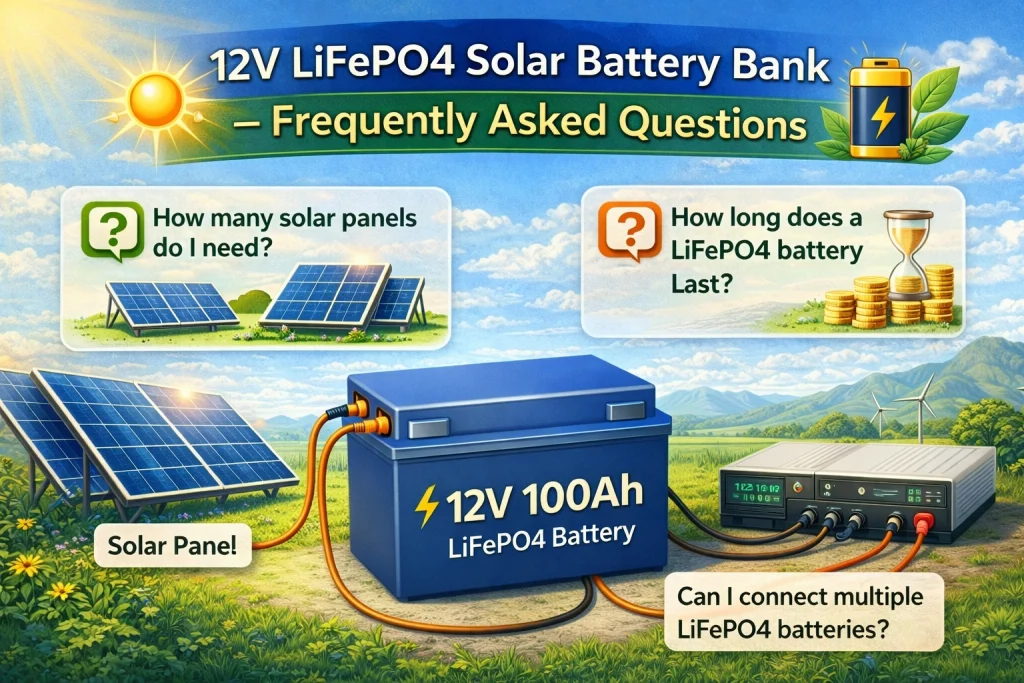
How long does a LiFePO4 solar battery last?
LiFePO4 batteries typically last between 8 to 15 years, depending on usage and charging conditions. Many batteries are rated for 3,000 to 6,000 charge cycles, making them one of the most durable battery options for solar systems.
How many solar panels do I need for a 12V 100Ah battery?
To fully charge a 12V 100Ah battery, you usually need around 200W to 400W of solar panels, depending on sunlight availability and charging efficiency.
A 300W solar panel is commonly used for this battery size.
Can I connect multiple LiFePO4 batteries together?
Yes, LiFePO4 batteries can be connected in parallel to increase capacity while maintaining the same voltage.
For example:
- two 12V 100Ah batteries in parallel = 12V 200Ah battery bank
Always ensure the batteries are identical in capacity and brand.
Do LiFePO4 batteries need a BMS?
Yes. Most LiFePO4 batteries include a Battery Management System (BMS).
The BMS protects the battery by preventing:
- overcharging
- over-discharging
- short circuits
- overheating
A BMS is essential for safe battery operation.
Is a 12V solar battery system enough for a house?
A single 12V battery system is usually designed for small loads such as lighting, fans, and electronics.
To power an entire house, larger systems such as 24V or 48V solar battery banks are typically required.
However, many homeowners start with a 12V system and expand their setup over time.
Explore Our Ready-Made Solar Power Systems
If you’re looking for a simple and reliable solar solution, check out our solar power units designed for home backup power and off-grid setups. These systems are perfect for beginners who want an easy and efficient solar energy solution.
Final Thoughts
Building a 12V LiFePO4 solar battery bank is a great starting point for anyone interested in solar power. With the right components and proper installation, you can create a reliable energy storage system that powers your home, reduces electricity costs, and provides backup power during outages.
As your energy needs grow, you can expand your solar system by adding more panels or increasing your battery capacity. Solar technology continues to evolve, making DIY solar setups more accessible and efficient than ever before.