Solar power is becoming one of the most practical and affordable ways to generate electricity at home. With the rising cost of electricity and the availability of modern battery technology, many homeowners are now building their own DIY solar power systems.
This beginner guide will explain how solar power works, the components you need, and how to build your own system safely and efficiently.
What Is a DIY Solar Power System?
A DIY solar power system is a setup where you generate electricity using solar panels and store that energy in batteries for later use.
Instead of relying entirely on the power grid, you produce your own electricity from sunlight.
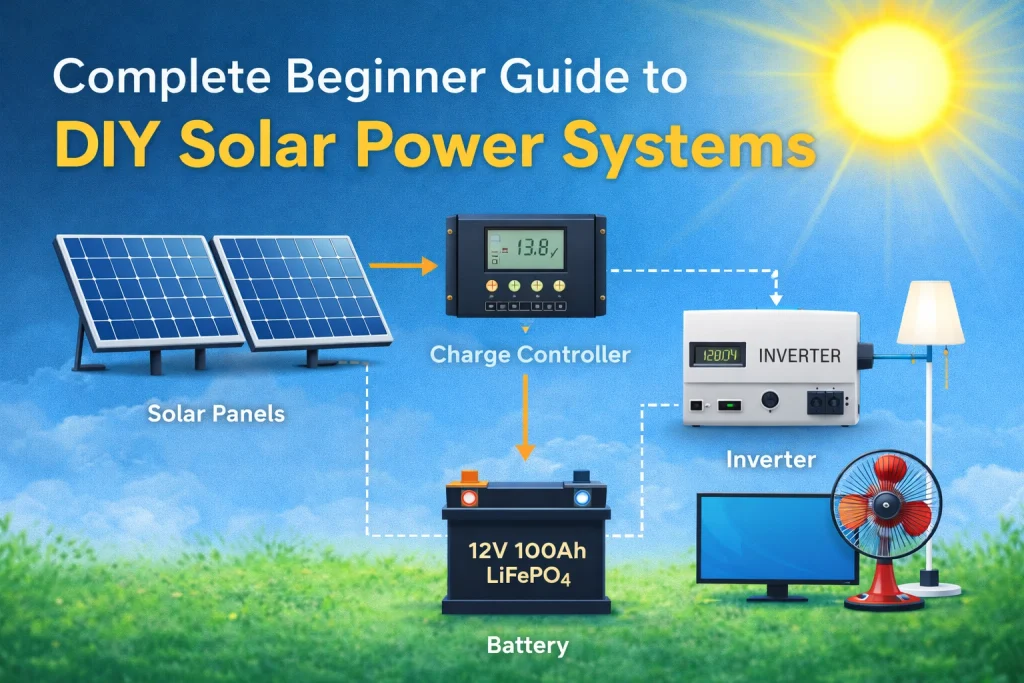
A basic solar system converts sunlight into usable electricity through this process:
Sunlight → Solar Panels → Charge Controller → Battery → Inverter → Appliances
Main Components of a Solar Power System
Understanding the parts of a solar system is important before building one.
1. Solar Panels
Solar panels capture sunlight and convert it into electricity.
There are three common types:
- Monocrystalline – highest efficiency and longest lifespan
- Polycrystalline – slightly cheaper but less efficient
- Thin-film – flexible but lower efficiency
For small DIY systems, panels usually range from 100W to 550W.
Example:
- 300W panel
- 400W panel
- 550W panel
2. Solar Charge Controller
The charge controller regulates the electricity coming from the solar panels before it reaches the battery.
It prevents:
- battery overcharging
- battery damage
- unstable voltage
There are two main types:
PWM (Pulse Width Modulation)
- cheaper
- best for small systems
MPPT (Maximum Power Point Tracking)
- more efficient
- can increase solar efficiency by 20–30%
3. Battery Storage
Solar batteries store electricity so you can use it at night or during cloudy weather.
Common battery types:
Lead Acid Batteries
- cheapest option
- heavy
- shorter lifespan
Lithium Batteries (LiFePO4)
- longer lifespan (up to 10 years)
- lighter
- more efficient
- safer than traditional lithium batteries
Many DIY solar builders now prefer LiFePO4 batteries.
4. Inverter
Solar panels and batteries produce DC power, but most home appliances use AC power.
An inverter converts:
DC → AC electricity
Example inverter sizes:
- 500W inverter – lights, fans
- 1000W inverter – TV, laptop
- 2000W inverter – refrigerator
- 5000W inverter – full house loads
5. Solar Cables and Protection
Solar systems also require proper wiring and safety components.
Important parts include:
- solar cables (10AWG–14AWG)
- DC breakers
- fuse protection
- battery terminals
- grounding
Using proper cables prevents overheating and power loss.
Basic Solar System Diagram
A simple solar setup looks like this:
Solar Panel
     ↓
Charge Controller
     ↓
Battery
     ↓
Inverter
     ↓
Appliances
This is called an off-grid solar system, meaning it operates independently from the utility grid.
Example Beginner Solar Setup
Here is an example of a small home DIY system.
| Component | Example |
|---|---|
| Solar Panel | 300W |
| Charge Controller | 25A MPPT |
| Battery | 12V 100Ah LiFePO4 |
| Inverter | 800W |
This setup can power:
- LED lights
- phone charging
- laptop
- electric fan
- small TV
If you prefer a ready-made solar solution instead of building everything from scratch, you can explore our available solar power systems designed for beginners and home backup setups.
👉 View Available Solar Power Systems
These solar power units are designed for easy installation, reliable backup power, and efficient energy storage, making them a practical solution for homes experiencing frequent power interruptions.
How to Size Your Solar System
To determine the size of your system, calculate your daily energy usage.
Example:
| Appliance | Power | Hours | Total |
|---|---|---|---|
| LED lights | 20W | 5 hours | 100Wh |
| Fan | 60W | 6 hours | 360Wh |
| TV | 80W | 4 hours | 320Wh |
Total daily consumption:
780Wh per day
You would need around:
- 300W–400W solar panels
- 100Ah battery
Common Beginner Mistakes in DIY Solar Systems
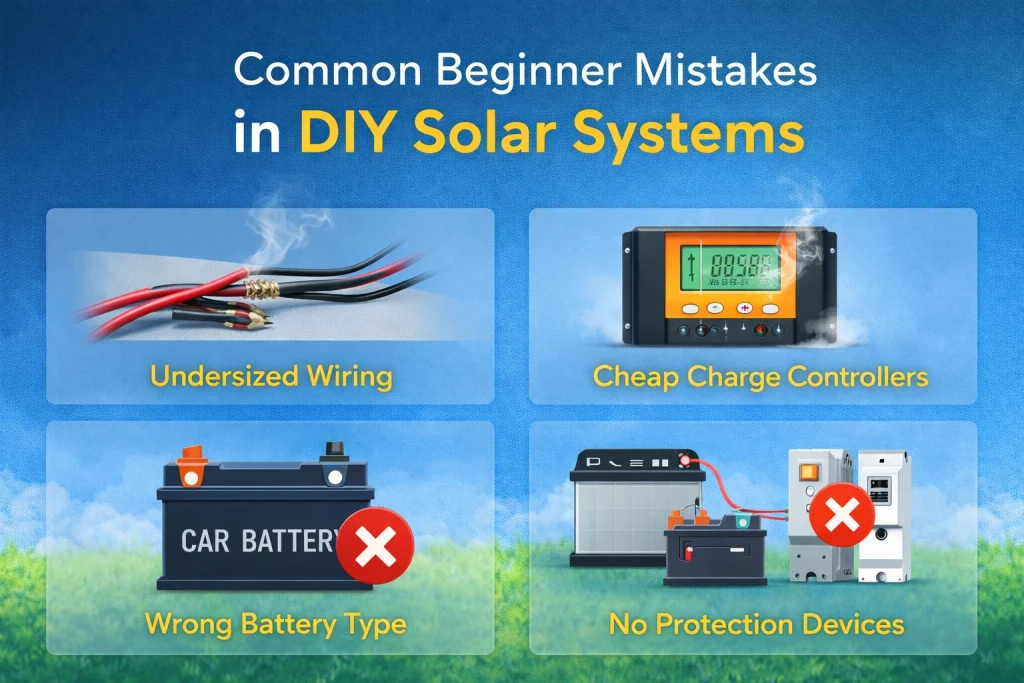
Many beginners make mistakes when building their first solar power system. These mistakes can lead to poor system performance, damaged components, or even safety hazards. Understanding these common issues can help you design a more efficient and reliable solar setup.
Undersized Wiring
Using wires that are too small for your solar system can cause serious problems.
Small wires increase electrical resistance, which leads to voltage drop and heat buildup. Over time, this can damage cables or reduce the efficiency of your solar panels.
For example, using 14 AWG wire for long cable runs may result in significant energy loss.
To prevent this issue:
- Use the correct AWG wire size based on current and distance
- Keep cable runs as short as possible
- Use 10 AWG or 12 AWG solar cables for most small systems
Proper wiring ensures your system operates safely and efficiently.
Cheap Charge Controllers – A Common Mistake for Solar Beginners in the Philippines
One of the biggest mistakes many solar beginners in the Philippines make is buying extremely cheap solar charge controllers. While they may look attractive because of the low price, these low-quality controllers often cause serious problems in a solar system.
Cheap charge controllers may:
- Fail to regulate battery charging properly
- Overcharge or undercharge batteries
- Cause overheating and system instability
- Significantly reduce battery lifespan
In tropical countries like the Philippines, where solar panels receive strong sunlight almost all year round, proper charging regulation is extremely important. Without a reliable charge controller, batteries can easily become damaged due to unstable charging conditions.
A high-quality solar charge controller protects your battery and ensures that your solar panel produces energy efficiently. It manages the power coming from the solar panels and delivers the correct voltage and current to your battery.
Whenever possible, it is highly recommended to use a MPPT (Maximum Power Point Tracking) charge controller. Compared to traditional PWM controllers, MPPT controllers can increase solar charging efficiency by 20–30%, especially during cloudy weather or early morning and late afternoon sunlight conditions.
MPPT controllers are particularly useful for solar setups used for:
- Home backup power systems
- Off-grid houses in provinces
- Solar power boxes and portable systems
- Small business solar setups
- Camping and outdoor solar power systems
Although a quality charge controller may cost slightly more at the beginning, it protects your battery investment and improves your entire solar system performance.
If you are looking for reliable and affordable solar charge controllers in the Philippines, you can explore our available options here:
👉 Browse Solar Charge Controllers
Choosing the right charge controller today can save you from expensive battery replacements in the future.
Wrong Battery Type
Not all batteries are designed for solar energy storage.
Some beginners use batteries that are not suitable for deep cycling, such as automotive starter batteries. These batteries are designed for short bursts of power and can quickly degrade when used in solar systems.
Better options include:
- Deep-cycle lead acid batteries
- AGM batteries
- LiFePO4 lithium batteries
Among these, LiFePO4 batteries are becoming the most popular because they offer:
- longer lifespan
- higher efficiency
- lighter weight
- better safety
Choosing the correct battery type ensures your solar system will last for many years.
No Protection Devices
Safety is often overlooked in beginner solar setups.
Many DIY builders connect solar panels and batteries directly without proper protection devices. This can be dangerous and may lead to electrical faults or fire hazards.
Important protection components include:
- DC circuit breakers
- fuses
- battery disconnect switches
- surge protection
These devices protect your system from overloads, short circuits, and electrical faults.
Adding proper protection not only improves safety but also makes maintenance easier.
Poor Solar Panel Placement
Another common mistake is installing solar panels in locations where they receive limited sunlight.
Panels should ideally be installed in areas that receive direct sunlight for most of the day. Shade from trees, buildings, or nearby structures can significantly reduce solar output.
To maximize solar energy production:
- face panels toward the sun’s direction
- avoid shaded areas
- use a tilt angle appropriate for your location
Proper placement ensures your solar panels operate at maximum efficiency.
Incorrect System Sizing
One common mistake beginners make when installing solar power systems is choosing a system that is too small for their energy needs. This issue can also be seen in many households in the Philippines, especially when people try to build a solar setup without properly estimating their daily electricity usage.
If your solar system cannot produce or store enough power, the batteries will drain quickly and appliances may stop working properly, especially during nighttime or cloudy days. This can be frustrating for homeowners who rely on solar energy for backup electricity during brownouts.
Before building a solar system, it is important to calculate your daily energy consumption by listing the appliances you plan to use, such as lights, electric fans, phone chargers, WiFi routers, and televisions. Once you know your total energy usage, you can choose the correct solar panel capacity, battery size, and inverter rating for your setup.
A well-sized solar system provides reliable power, prevents system overload, and ensures that your home has enough stored energy when solar panels are not producing electricity.
For homeowners in the Philippines who prefer a simpler solution, choosing a ready-made solar power system can be a convenient option. These systems are already designed for home backup and beginner solar setups, making installation easier and more reliable.
👉 Browse Ready-Made Solar Power Systems
These solar units are designed to provide dependable electricity for essential appliances during brownouts, making them a practical and hassle-free solar solution for Filipino households.
Benefits of DIY Solar Power
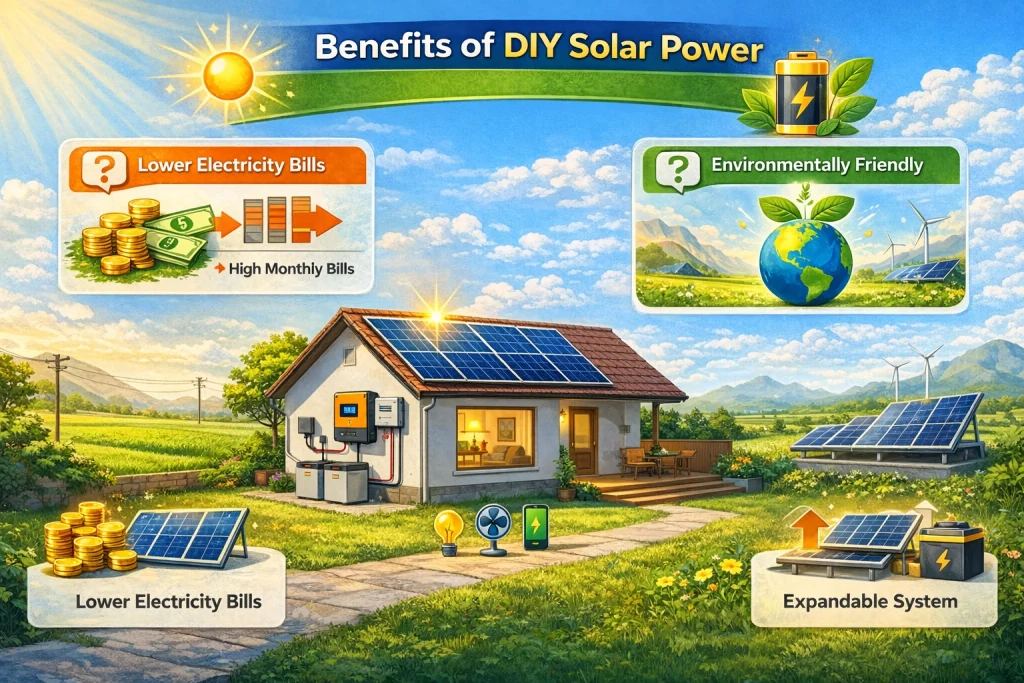
Building your own solar power system offers many advantages for homeowners and small businesses. Aside from reducing electricity costs, solar energy provides long-term energy security and environmental benefits. As solar technology becomes more affordable and accessible, many people are choosing to build their own systems rather than relying entirely on traditional power sources.
Below are some of the key benefits of installing a DIY solar power system.
Lower Electricity Bills
One of the biggest advantages of solar power is the ability to significantly reduce your electricity expenses.
When your solar panels generate electricity from sunlight, you rely less on electricity supplied by the utility grid. This means your monthly electricity bill can decrease, especially if your solar system produces enough energy to power most of your appliances.
Over time, the savings from solar energy can offset the initial investment required to build the system. In many cases, homeowners recover their solar setup costs within a few years while continuing to benefit from free energy generated by the sun.
Energy Independence
Solar power allows you to produce your own electricity instead of relying entirely on traditional power providers.
This is especially useful in areas where power outages occur frequently. With a properly designed solar system and battery storage, you can still power essential appliances such as lights, fans, communication devices, and small electronics during blackouts.
Energy independence gives homeowners greater control over their electricity supply and reduces vulnerability to rising energy prices.
Environmentally Friendly
Solar energy is one of the cleanest and most sustainable sources of electricity available today.
Unlike fossil fuels, solar panels generate power without producing harmful emissions or pollution. This helps reduce your carbon footprint and contributes to a healthier environment.
By using renewable energy from the sun, households can help reduce the global dependence on non-renewable energy sources while promoting sustainable energy solutions.
Expandable and Scalable System
One of the advantages of DIY solar systems is their flexibility and expandability.
You can start with a small solar setup that powers only a few appliances and gradually expand your system as your energy needs increase or as your budget allows.
For example, you can:
- add more solar panels to increase energy production
- install additional batteries to store more power
- upgrade your inverter to support larger electrical loads
This scalability allows your solar system to grow over time without needing to replace the entire setup.
Long-Term Investment
Solar systems are considered a long-term investment because many components have long lifespans.
Most solar panels can last 20 to 25 years, while modern lithium batteries can last several years depending on usage. Once the system is installed, the operating costs are relatively low compared to traditional electricity sources.
This makes solar energy a practical investment that continues to provide value for many years.
Reliable Backup Power
Another benefit of having a solar system with battery storage is access to backup electricity during emergencies.
When the main power grid fails, your solar battery system can still supply electricity to critical appliances such as lights, communication devices, and basic home equipment. This added reliability can be extremely valuable during storms, natural disasters, or unexpected power interruptions.
Frequently Asked Questions (FAQ) About DIY Solar Power Systems
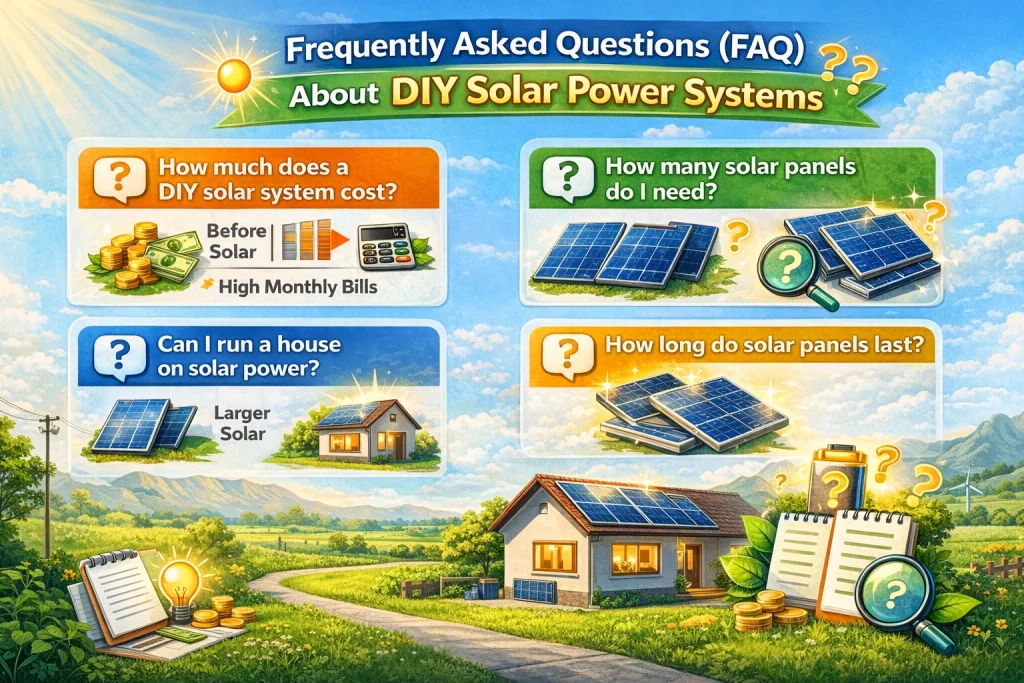
How much does a DIY solar system cost?
The cost of a DIY solar power system depends on the size of the system, the quality of the components, and the type of battery used.
For small home setups, a basic system may cost between $300 to $1,500. This usually includes solar panels, a charge controller, battery storage, and an inverter.
Larger systems designed to power more appliances or an entire house may cost $2,000 to $10,000 or more depending on the energy capacity and battery size.
Although the initial investment may seem high, solar systems can significantly reduce electricity bills over time, making them a cost-effective long-term solution.
How many solar panels do I need?
The number of solar panels required depends on how much electricity your home uses daily.
To estimate this, calculate the total watt-hours consumed by your appliances. For example, if your household uses around 1,000 watt-hours per day, you may need around 3 to 4 solar panels rated at 300W each, depending on sunlight conditions.
Other factors that affect panel requirements include:
- the efficiency of the solar panels
- the number of peak sunlight hours in your location
- battery storage capacity
A properly sized system ensures consistent and reliable energy production.
Can I run a house on solar power?
Yes, it is possible to power an entire house using solar energy, but it requires a properly designed system with enough solar panels and battery storage.
Small solar setups can power essential appliances such as lights, fans, and electronics. However, running larger appliances like refrigerators, air conditioners, and washing machines requires a larger solar system with higher capacity batteries and inverters.
Many homeowners start with a small system and gradually expand their solar setup as their energy needs grow.
How long do solar panels last?
Most modern solar panels have a lifespan of 20 to 25 years or more. Over time, their efficiency may gradually decrease, but they can still produce usable electricity for many years.
High-quality solar panels also come with long manufacturer warranties, often covering 20 years or more, ensuring reliable long-term performance.
Is DIY solar installation safe?
DIY solar installation can be safe if proper precautions and electrical safety practices are followed. It is important to use the correct wiring, install circuit breakers and fuses, and follow proper system design guidelines.
Beginners should start with small systems and gradually learn more about solar installation before attempting larger setups.
If you are unsure about electrical connections or system design, consulting a professional installer can help ensure a safe and efficient solar system.
If you are looking for ready-made solar power systems, you can also check our available solar units designed for beginners and small home setups:
These systems are designed to power essential appliances such as lights, fans, phone chargers, and small electronics.
Final Thoughts
DIY solar power systems are becoming easier and more affordable every year. With the right components and proper planning, anyone can build a reliable solar setup for their home.
Start small, learn the basics, and expand your system as your energy needs grow.
Solar technology continues to improve, making it one of the most practical investments for sustainable energy.